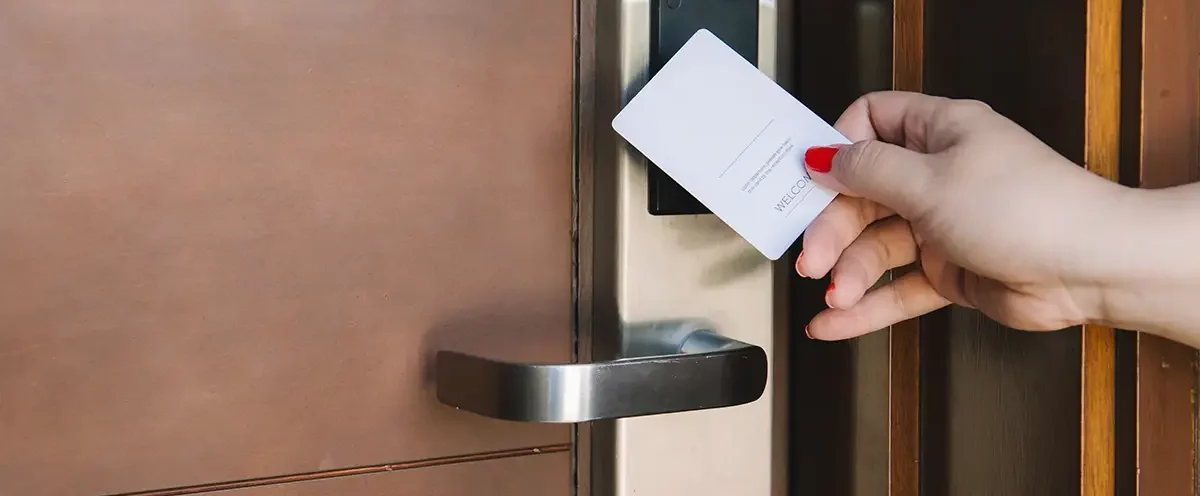
Whether you’re traveling for business, vacation, or a weekend getaway, your hotel room should be a place where you can relax—not worry about your safety. While most hotel stays are completely uneventful, criminals often target travelers because they’re unfamiliar with their surroundings and may let their guard down.
The good news is that protecting yourself only takes a few minutes.
Here are the simple steps every traveler should follow when entering and securing a hotel room.
Before You Even Walk In
As you approach your room, take a moment to look around.
Ask yourself:
- Is anyone lingering in the hallway without an obvious reason?
- Does the door appear damaged or slightly open?
- Are there signs someone has tampered with the lock?
If anything feels off, trust your instincts. Return to the front desk and request another room.
Remember: intuition is one of your most valuable safety tools.
Open the Door Carefully
Don’t immediately walk into the room.
Instead:
- Unlock the door.
- Open it slowly.
- Stand slightly to the side of the doorway rather than directly in front of it.
- Take a quick look inside before entering.
This simple habit gives you an extra layer of protection if someone is unexpectedly inside.
Check the Entire Room
Once inside, don’t assume the room is empty.
Perform a quick sweep by checking:
- Bathroom
- Closet
- Behind curtains
- Behind large furniture if visibility is limited
- Connecting doors to adjacent rooms
This takes less than 30 seconds and gives you peace of mind.
Lock the Door Immediately
Once you’ve confirmed the room is empty:
- Engage the deadbolt.
- Close the security latch or swing bar.
- Lock any secondary locks the room provides.
Many travelers wait until after unpacking to secure the door. Make locking it your first priority.
Secure the Windows and Balcony
If your room has:
- A balcony
- Sliding glass door
- Accessible first-floor window
Verify that each one is locked.
Even upper-floor balconies may provide access from neighboring rooms.
Locate Your Emergency Exit
Before settling in, know exactly how to leave if an emergency occurs.
Take note of:
- The nearest stairwell
- The secondary exit
- The number of doors between your room and the nearest exit
If smoke fills the hallway during a fire, counting doors may be the only way to find your exit.
Never Open the Door Without Verification
If someone knocks unexpectedly:
- Don’t immediately open the door.
- Use the peephole.
- Verify through the door who they are.
- If they claim to be hotel staff, call the front desk to confirm before opening.
Criminals sometimes impersonate hotel employees.
A legitimate employee will understand your caution.
Add an Extra Layer of Security
Consider carrying a portable hotel door security device when you travel.
Popular options include:
- Portable door locks
- Door wedges with alarms
- Travel door alarms
- Small battery-powered motion alarms
These inexpensive tools provide additional protection, especially for solo travelers.
Keep Your Room Number Private
Never announce your room number loudly at the front desk.
If the clerk says it aloud, politely ask them to write it down instead.
Also avoid:
- Posting your room number on social media
- Telling strangers where you’re staying
- Leaving your room number visible on luggage tags
The fewer people who know your location, the better.
Protect Your Valuables
Don’t leave valuables in plain sight.
Whenever possible:
- Use the room safe.
- Lock expensive electronics in your luggage.
- Keep passports and extra cash secured.
- Carry essential medications with you.
If something is irreplaceable, don’t leave it unattended.
Be Careful When Leaving
Before opening your door to leave:
- Listen for activity in the hallway.
- Check through the peephole.
- Be aware of anyone standing nearby.
When exiting, close the door completely and verify it latches securely behind you.
Trust Your Intuition
If something doesn’t feel right, don’t ignore it.
Request another room.
Move to a different floor.
Ask hotel security for assistance.
Leave the property if necessary.
Your intuition often notices danger before your conscious mind can explain it.
Final Thoughts
Most hotel stays are perfectly safe. But safety isn’t about living in fear—it’s about developing simple habits that reduce risk.
A quick room check, properly locking your door, verifying unexpected visitors, and staying aware of your surroundings can dramatically improve your personal security while traveling.
The best self-defense situation is the one that never happens because you recognized risk early and took proactive steps.
At Mindful Defense, we believe that personal safety begins long before a confrontation. Awareness, preparation, and confident decision-making are your greatest tools.
Because 100% of confrontations that are avoided can be won.
Be S.A.F.E. – Strong. Aware. Focused. Empowered.