Overview
Recent events, in particular active killers murdering school children, have once again started the discussion of “how others can protect us.” Whether it is passing new laws we hope others will obey, posting armed guards who may or may not have the mental and physical skill set to defend us, or putting more law enforcement on the streets who have an average response time much longer than the average time it takes to commit a mass killing. We must accept the fact that victims are the first responders and must be prepared to defend themselves.
All of the aforementioned solutions have one common weakness. A dependability on others. We cannot control the actions of others or depend on anyone to be there for us when we need them most. We must accept responsibility for our safety and that of our loved ones.
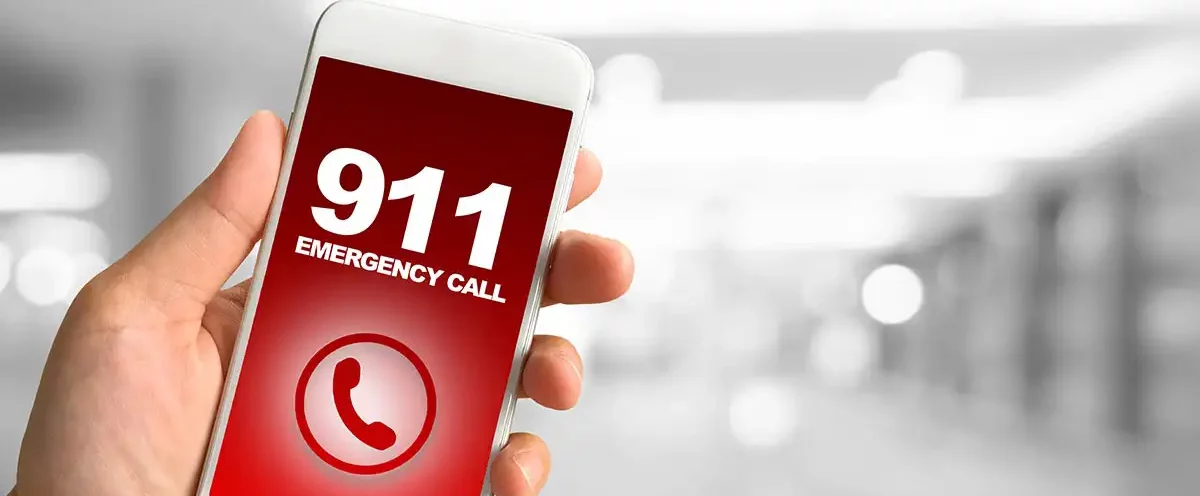
So let’s assume you’re in danger and need to call 911 to start the process of summoning help. Depending on where you live, you may not get a dispatcher on the line very quickly. As a matter of fact, you may be faced with a long hold time. In Kansas City for example, long wait times have plagued 911 dispatchers for decades.
It was a call to 911 when I was 18 that drove home the point when help is needed most, you cannot count on others. Help was needed and I felt fortunate to have immediate access to a phone. I was under the delusion that police where a few minutes away. However, what I didn’t know was that I would never get a person on the phone. I was greeted with a recorded voice urging me not to hang up and that a dispatcher would be with me shortly. After several iterations of this recording, I realized that it was in my best interest to hang up and to problem solve on my own. Time was of the essence and being on hold with 911 was not an option.
Be Part of the Solution
As much as “traditional” first responders, such as police, fire and medical, want to provide help as quickly as possible, they may arrive too late. Never lose sight of the fact that you are the first responder and must be an active participant in your own self-defense and safety.
Next week I will publish a blog that details how you can put together your own self-defense training program. The blog will cover training resources which will put you one step closer to effectively defending and caring for yourself and others. You have to assume that when help is needed, no one will be coming.