The ability to determine if someone is carrying a weapon is crucial to your self-defense. Often times there are telltale signs that someone is carrying a weapon before it is overtly displayed. Here are some things you need to know in order to determine if someone is armed.
Determine Dominant Hand
When people carry weapons, they usually do so in a manner that the weapons are accessible to their dominant hand. Determining a person’s dominant hand will give you a starting place to look for weapons, or allow stronger confirmation if a weapon is already detected.
- Dominant Hand: Most people use their dominant hand to eat, light cigarettes, open doors, etc. Start paying attention to what you do with your dominant hand, as others most likely do this as well.
- Non-Dominant Hand: The non-dominant hand is usually where people wear watches and jewelry. Most people will also pick up drinks with their non-dominant hand.
Detecting the Presence of a Weapon
- Security Feel: Often times those who carry concealed weapons will periodically touch the weapon, adjust its position, and pull on their concealment garment to make sure it’s not caught on the weapon.
- Wearing Clothing Not Appropriate for the Season: If it’s summer time and someone appears wearing a trench coat, there’s a reason. More likely than not, something is being concealed. Know your environment, the norms and what is out of place in regard to clothing.
- Unnatural Gait: Observe how people walk. If someone has an unnatural gate, it could be an indication that a weapon is being concealed. Concealing weapons inside of the pants, especially long guns, may hinder one’s ability to walk naturally.
- Jacket Sag: Jackets and outer garments should hang naturally, and evenly. They should move freely and not be heavily weighted. If you observe one side of someone’s garment sagging and and it appears weighted down, you have to assume they are carrying a weapon.
- Hunchback Stride: When people carry excessive weight they are trying to conceal, they have a tendency to lean over in an effort to keep the item in close to their body as they walk.
- Bulges/Outline of Weapon: Most people who conceal weapons do so under their normal clothing, which was purchased to fit without the bulk of a weapon. Therefore, the weapon will bulge through the clothing and an outline of the weapon will be visible. This is called “printing.”
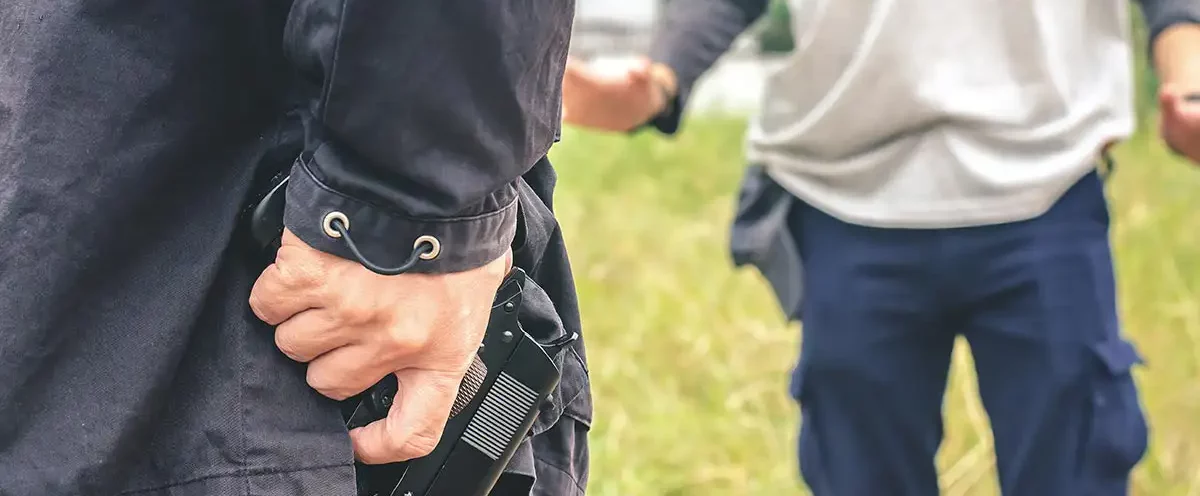
- Palming: Clenched hands are unnatural. Often times people will try to conceal weapons, such as knives, by palming the grip and having the blade run up the backside of their forearm. You may not be able to see the knife, but the “palming” of the hand is an indication that a weapon is present.
- Hidden Hands: What you can’t see can kill you. If you someone has their hands concealed, you have to assume they have a weapon.
Conclusion
Once you know what to look for and make this part of your situational awareness, detecting concealed weapons can be done quite easily. Detecting concealed weapons is a necessary skill when dealing with confrontations, large groups where active shooters may present themselves, and anytime you are in a transitional space.